
Publishing
Write Release Notes Players Can Use
Organize changes by impact, explain migration and known issues, and connect a version number to a verifiable build.
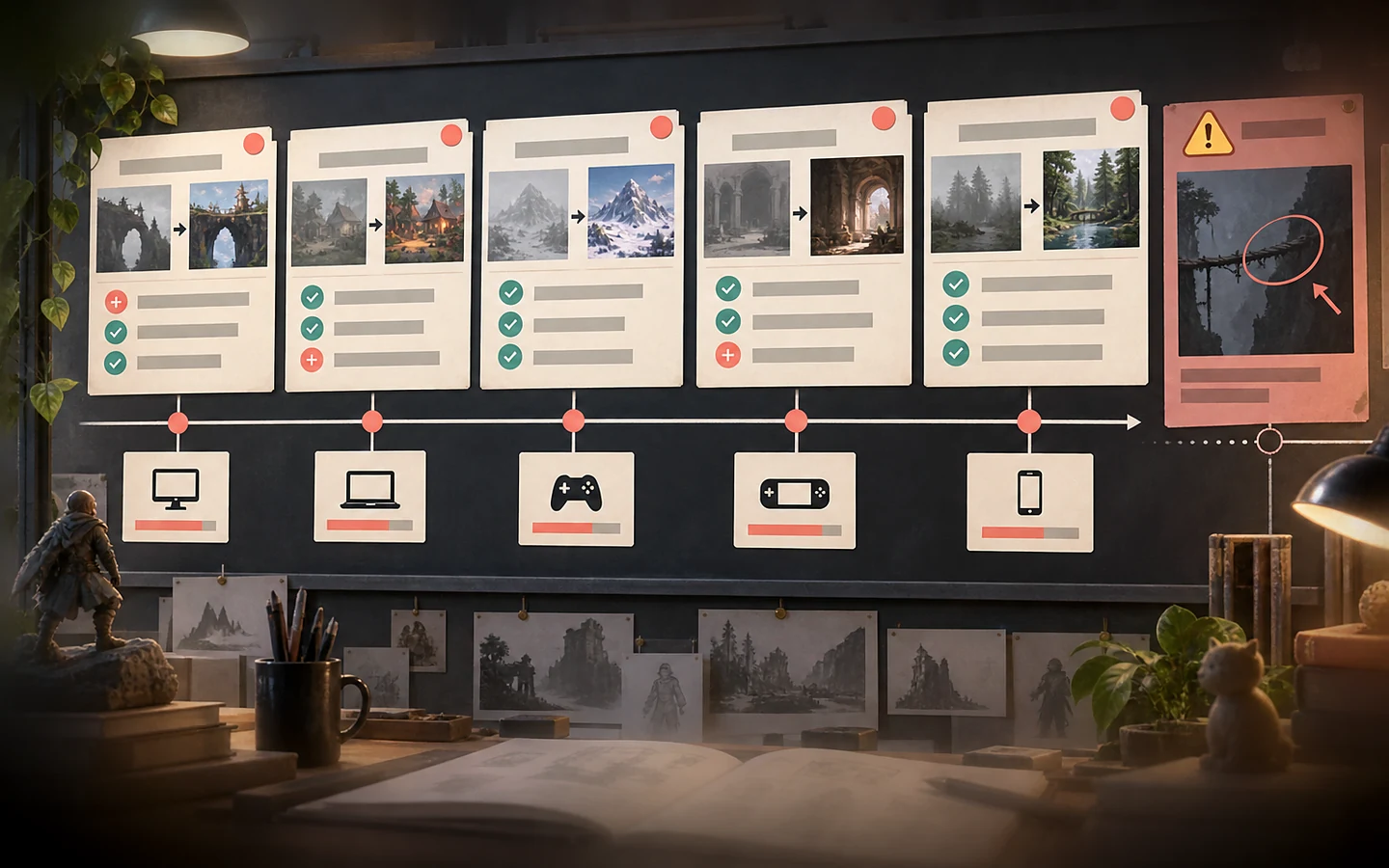
Release notes are an interface between a build and the people deciding whether to install, return, troubleshoot, or report a problem. A raw commit list is too technical, while “bug fixes and improvements” supplies no decision value. Useful notes name player-visible impact and connect it to a specific build.
Start with version identity
Record the public version, internal build identifier, platforms, release date, rollout state, and whether online compatibility requires everyone to update. Versioning schemes differ; what matters is that support, crash reports, save migrations, and public notes can refer to the same artifact.
If releases vary by platform, say so. Do not mark a fix available everywhere while certification or staged rollout is still in progress. Update the note when availability changes rather than silently changing the original date.
Lead with impact
Group changes into player-facing sections such as new, changed, fixed, accessibility, performance, balance, and known issues. Within each group, put broad or severe effects first. Explain the context: “Fixed a crash when loading a save created before version 1.2” is more actionable than “fixed null reference.”
Balance notes should name the affected item or mechanic, old and new values when useful, and the intended outcome. Players may disagree with the decision, but they can test the same change. Avoid hiding material reductions behind vague language.
A worked example: a save migration
An update changes quest identifiers. The note should warn that the first load may take longer while saves are upgraded, advise players not to close the game during that step, confirm whether a backup is created, and link to support. If a rare quest state cannot be migrated automatically, disclose the limitation and recovery option.
Internally, the release record should include the migration version and tested save fixtures. Public notes do not need implementation detail, but support staff need enough context to distinguish expected migration time from a hang.
Describe known issues honestly
List issues that materially affect play, data, access, performance, or promised features. Include affected platforms, conditions, workaround when safe, and status. Do not recommend deleting saves or changing system files without a verified recovery path.
Close resolved issues in a later note and preserve the original record. A searchable archive helps players and support teams connect symptoms with the version that introduced or fixed them.
Build notes from the release checklist
Draft notes before the final build, then reconcile them against the candidate. Remove changes that missed the branch, add late fixes, verify links, and have someone outside the implementation read for player meaning. Localize important warnings with the same care as in-game text.
Our editorial judgment is that release notes should reduce uncertainty. They are not a marketing substitute, confession, or engineering dump. A concise note can be excellent when it tells players what changed, whether it affects them, what to do, and where to get help.
Sources and verification
Primary documentation checked on 25 September 2026. Product and platform requirements can change; recheck the linked source before release work.